Hanwha Qcells Pitch Proposal

New Business Pitch | Dentsu Korea
Dec 28, 2022 – Jan 3, 2023 (1 week)
The pitch was completed within a one-week timeline (Dec 28 – Jan 3), requiring quick alignment and efficient structuring of key ideas.
Overview
This project was a new business pitch developed to secure a contract with HanwhaQcells, focused on strengthening its B2C digital presence.
The proposal was structured into two distinct workstreams:
Project A: Data-driven Market Research
Project B: SEO Strategy & Execution
Together, these workstreams addressed the full customer journey, from understanding user behavior to improving digital discoverability and site-level performance.
My Role
As a junior member in a three-person pitch team (1 senior lead, 1 C-level), my role was to support how complex strategic components were structured and communicated.
Rather than focusing only on slide execution,
Analyzed the overall structure of the proposal across both workstreams
Identified gaps in narrative flow and logical transitions between sections
Refined how the two workstreams (Research and SEO) were distinguished and connected
Improved information hierarchy and clarity for executive-level readability
I approached the work by understanding how different parts of the proposal functioned as a system, and how that system could be communicated more clearly.
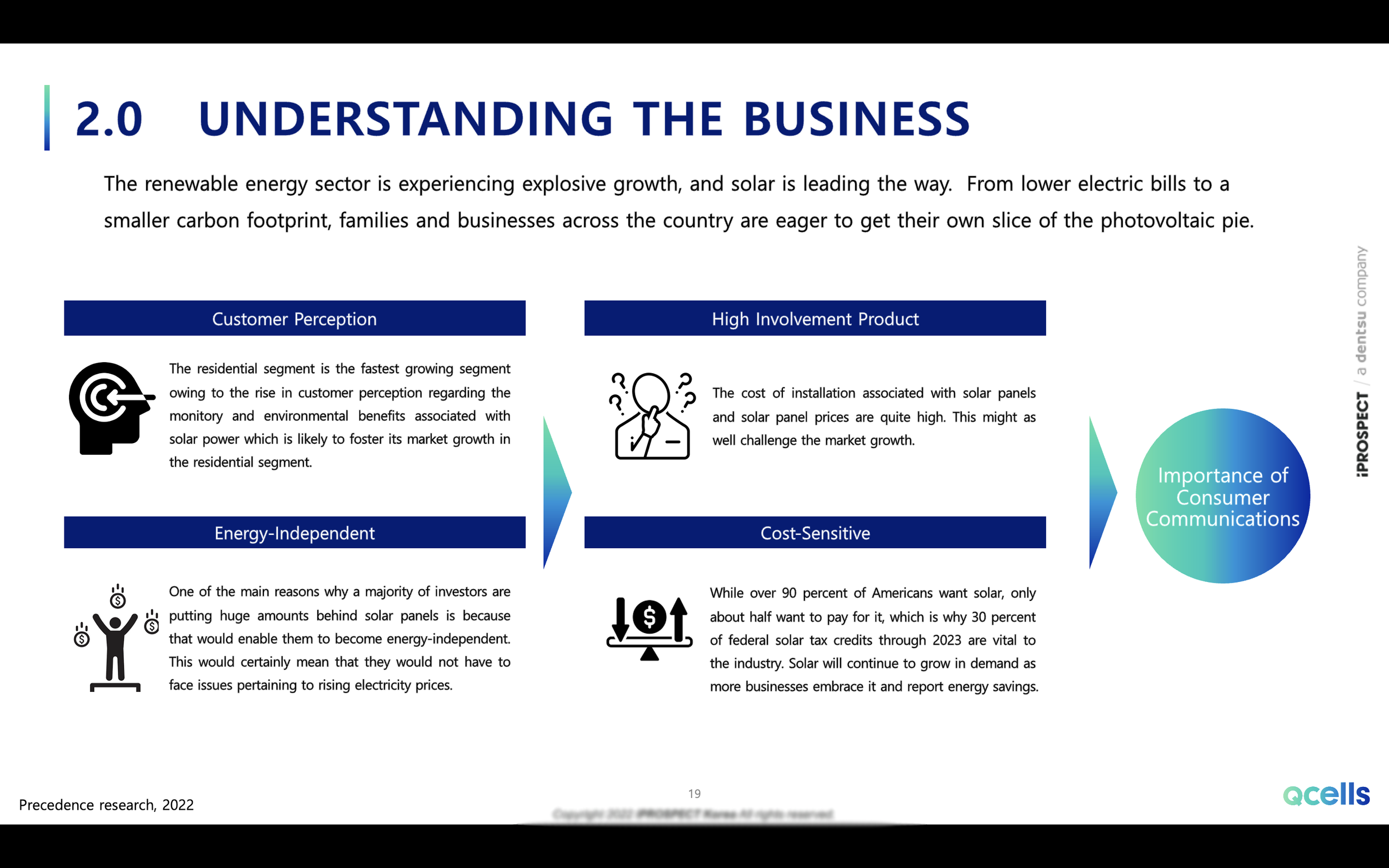
Market and consumer insights used to define key communication and positioning strategies.
Problem Framing
One of the key challenges in the pitch was that the proposal contained multiple layers — market research, customer journey, messaging, and technical SEO, which made it difficult to present as a single coherent narrative.
My focus was on:
How to structure multi-layered information so that it could be easily understood and evaluated by stakeholders.
Structure of the Solution
The proposal was designed as a two-part system:
A. Market & Customer Understanding (Project A)
Market and competitor analysis
Customer search behavior and data insights
Customer journey mapping
Persona definition and communication strategy
This defined how users think, search, and make decisions.
B. Digital Execution Layer (Project B)
Technical SEO audit and issue identification
Keyword and search intent analysis
Content and page optimization strategy
Site-level improvement recommendations and reporting
This defined how the client should perform within the digital ecosystem.
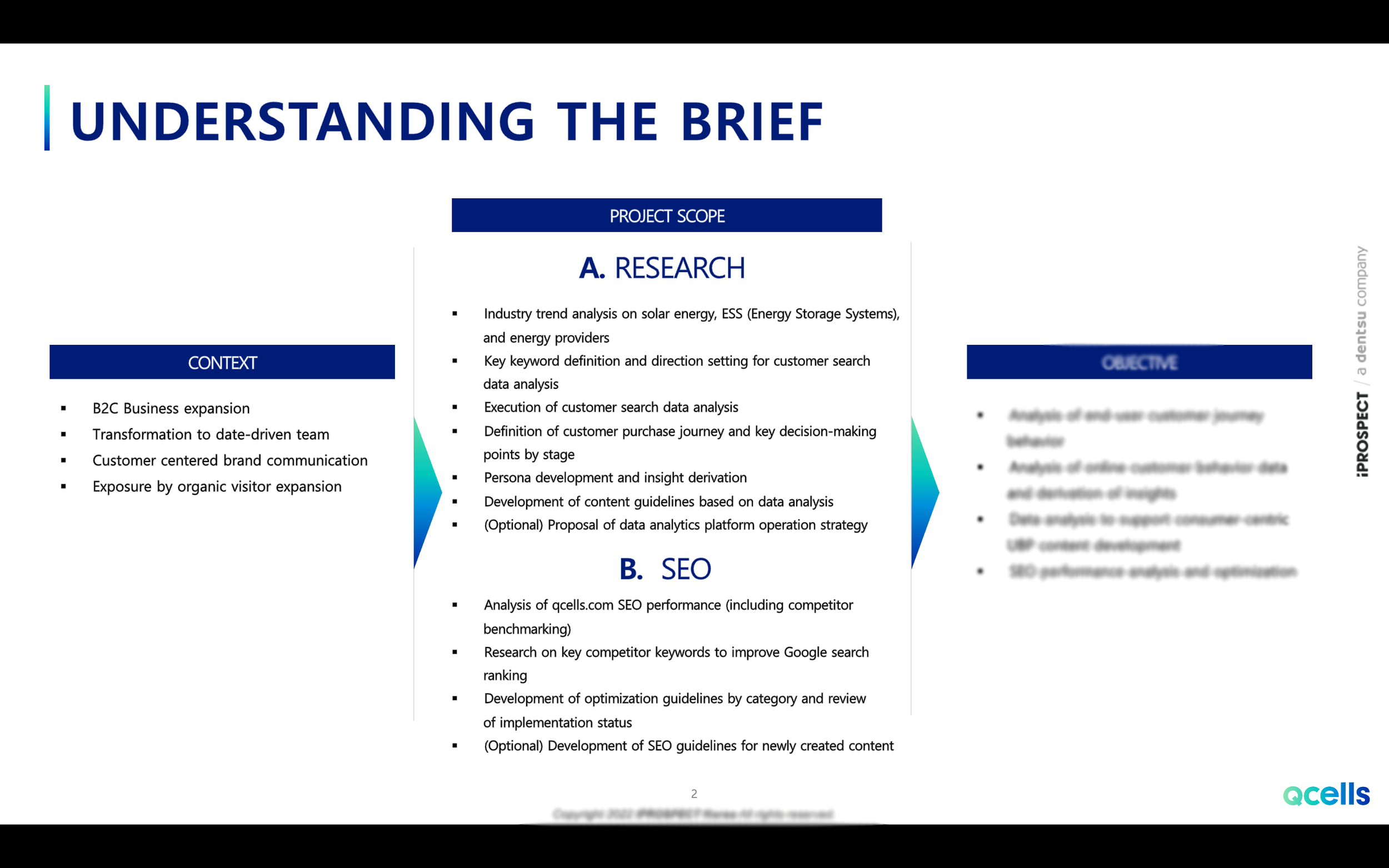
Two distinct workstreams — Research and SEO
Key Contributions
Within my scope, I focused on improving how this system was communicated:
Translated a multi-layered strategy into a more structured and digestible format
Strengthened the connection between research insights and execution strategy
Clarified the separation and relationship between the two workstreams
Contributed to refining a 30+ slide executive pitch deck within a small, senior-led team
My work helped ensure that complex ideas could be understood quickly and logically.
Key Learnings
1. Complex systems require clear structure
I learned that when multiple functions (research, UX, SEO) are involved, structuring information becomes critical for decision-making.
2. Digital strategy functions as a system, not isolated tasks
Customer journey, content, and SEO were not treated separately, but as interconnected components of a single experience.
3. Communication is part of problem-solving
Improving clarity and structure was not just presentation work — it directly impacted how the proposal could be evaluated.
4. Early exposure to product-level thinking
This was my first experience seeing how business strategy connects with user behavior, digital platforms, and site-level performance.
Outcome
The pitch was not successful in securing the client.
However, this project provided early exposure to:
How complex proposals are structured and evaluated at the executive level
How multiple strategic components are integrated into a single system
How clarity and structure influence business decision-making
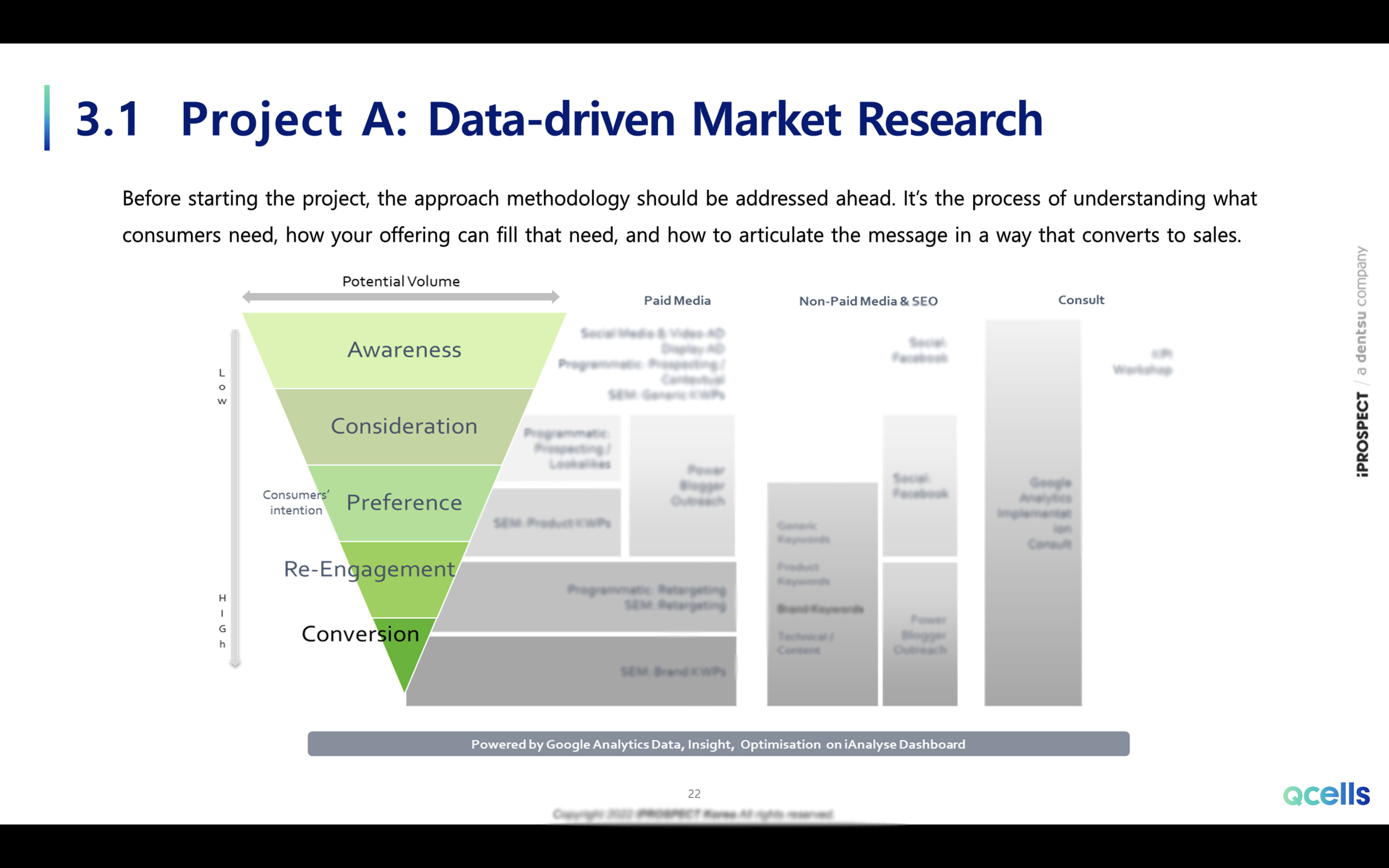
Customer journey framework illustrating how the strategy was aligned from awareness to conversion.